Summarize this article with:
Win-loss analysis is a structured method for evaluating the reasons behind winning or losing a commercial deal. In practice, this analysis involves collecting feedback from customers and prospects, won and lost alike, to understand why they chose your solution or a competitor's. In an ever-evolving B2B marketing environment, companies must navigate increasingly complex sales cycles, multiple stakeholders, high expectations, and fierce competition. Yet most organizations still drive their go-to-market strategy based on incomplete or inaccurate information.
The numbers speak for themselves:
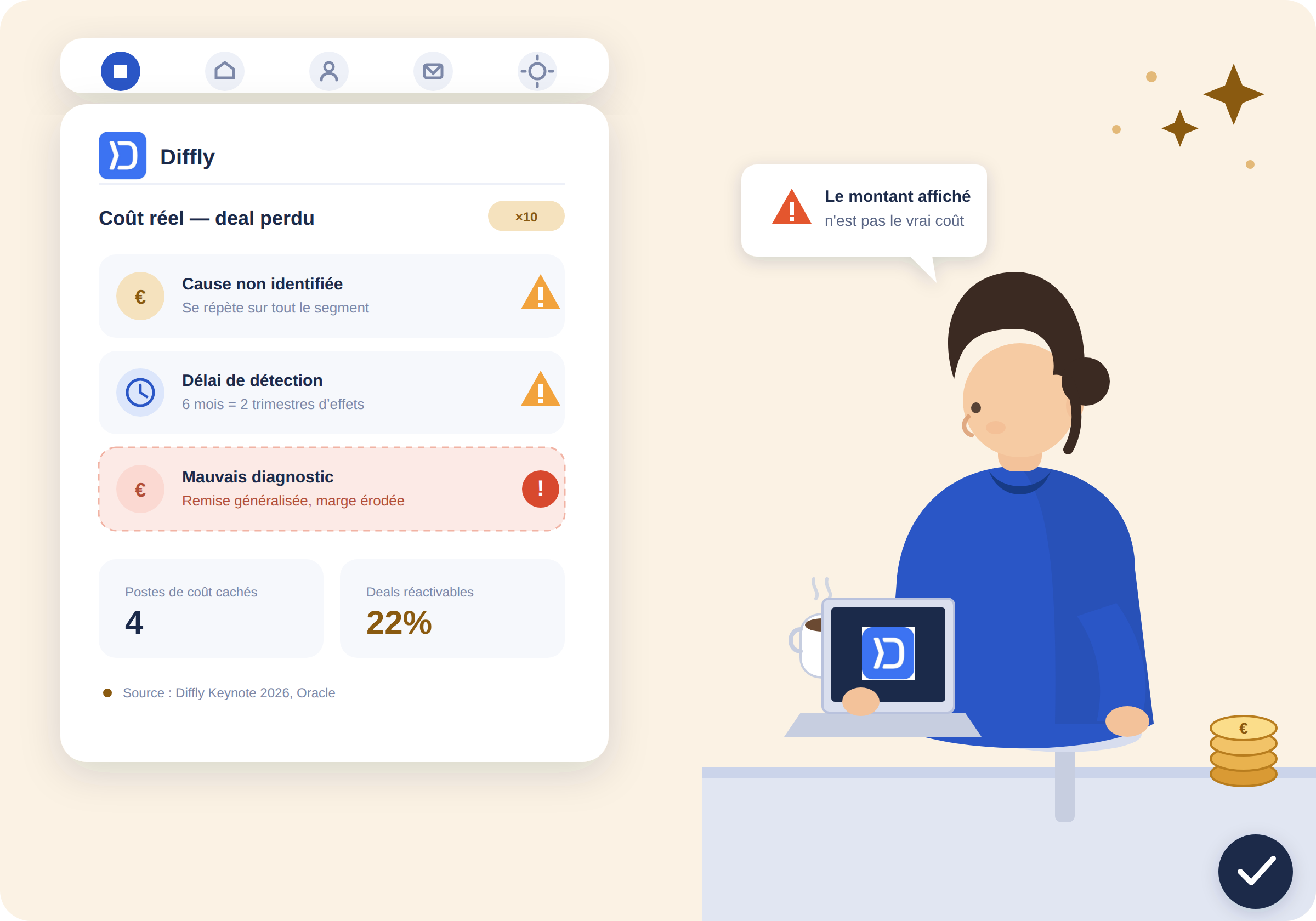
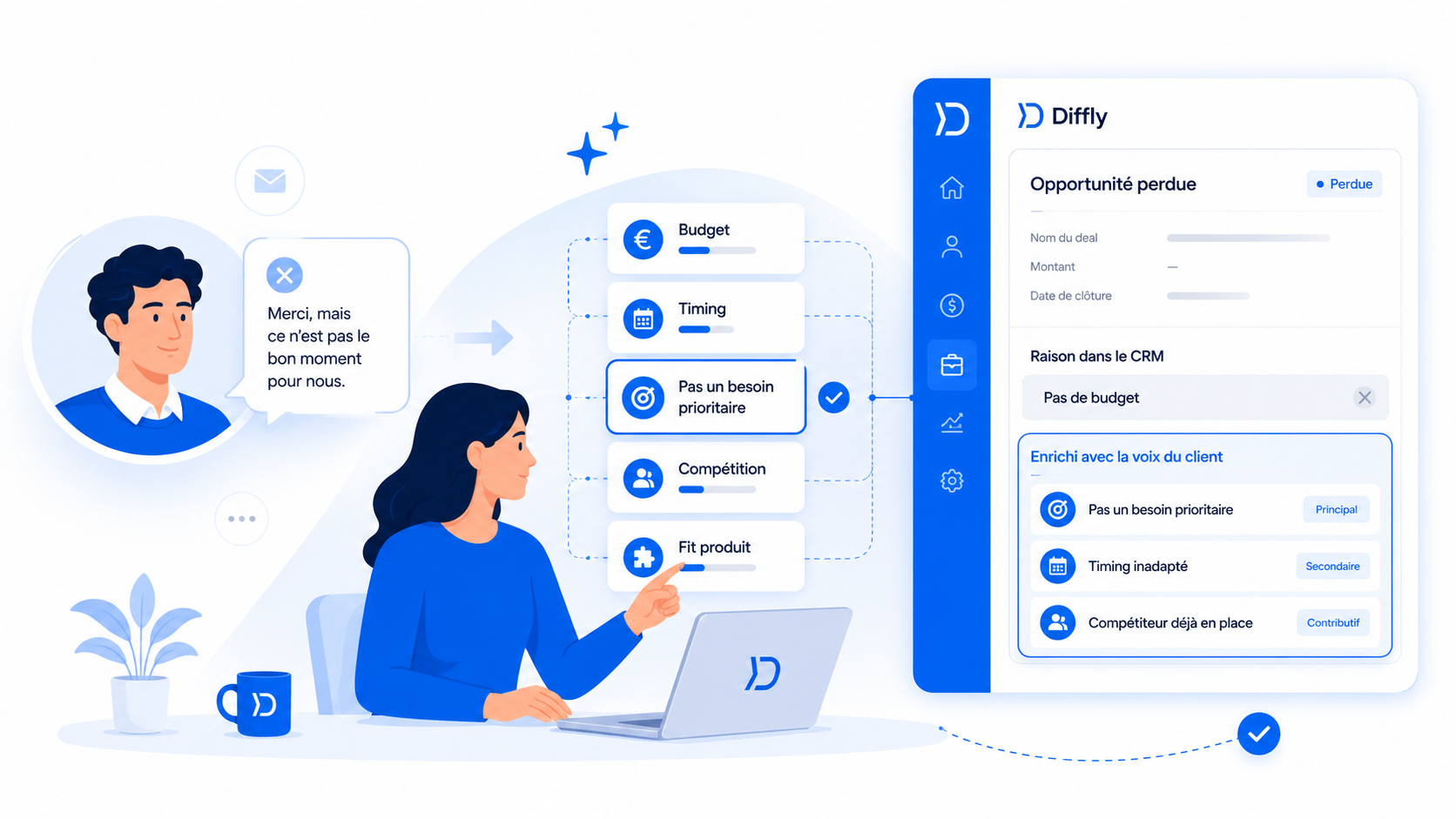
- 90% of loss reasons logged in CRMs are false or incomplete;
- 41% don't even explain why the deal was lost;
- a B2B buyer spends only 17% of their time interacting with your sales teams (source: Gartner, The New B2B Buying Journey, 2022);
- B2B sales decisions rely on an average of 4 to 5 real decision criteria, rarely documented.
The result: strategic choices are too often based on assumptions rather than the voice of the buyer.
Implementing a structured approach puts truth back at the center of decision-making. According to Gartner (Win/Loss Analysis: A Guide for Sales and Marketing Leaders, 2023), a rigorous program can improve commercial performance by up to 50%. A study by Primary Intelligence (now part of Crayon, a leader in competitive intelligence) found that 78% of companies that deployed a structured program saw an average increase of +32.5% in their results. Forrester Research further confirms that buyer-voice-driven organizations outperform their peers by 20 to 30% on retention metrics.
Here is how to deploy the best possible program : solid, sustainable, and effective.
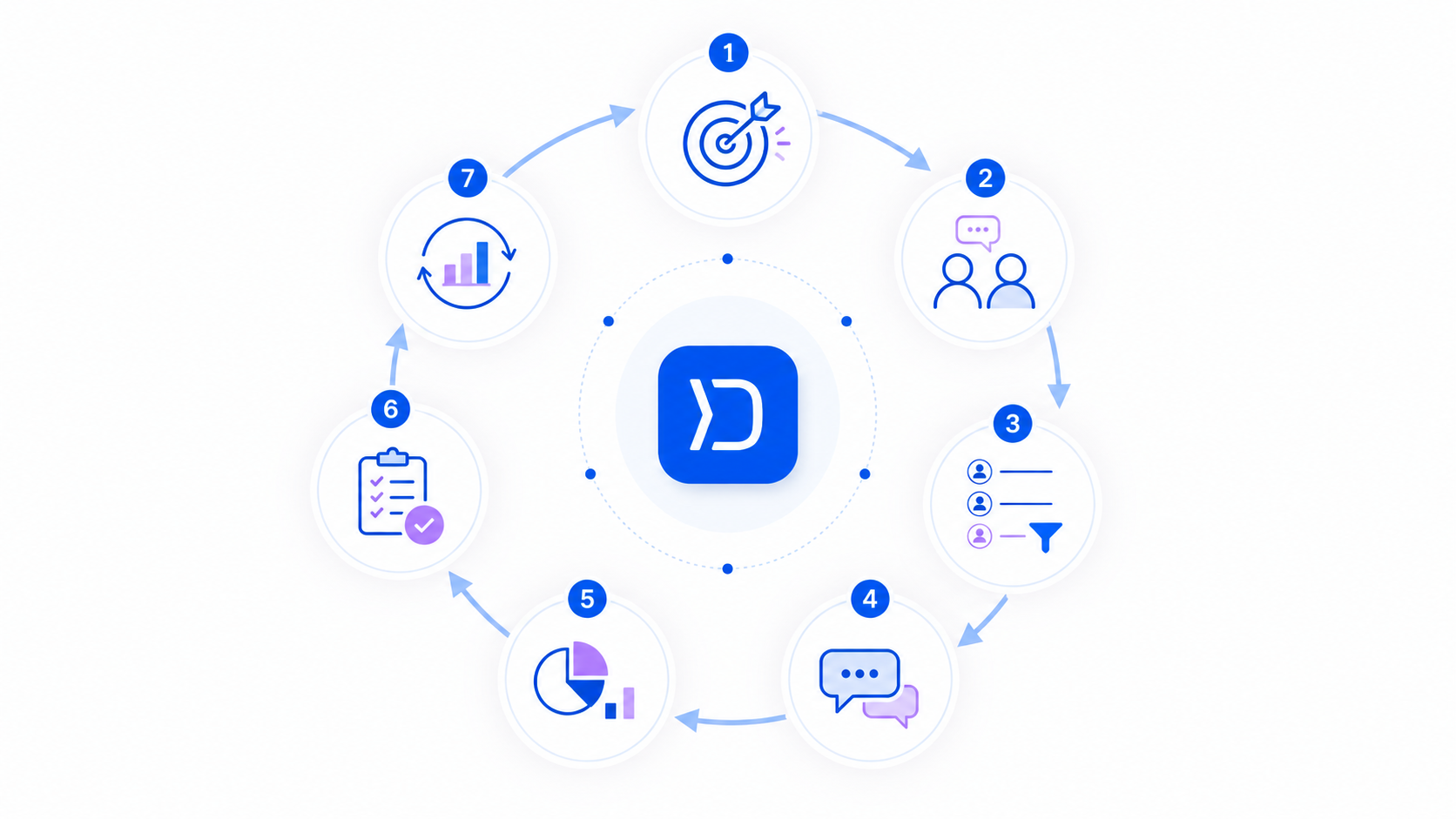
Summary table of the 7 steps
Step 1: Clarify your program's ambition
Before launching data collection and analysis, it is essential to answer one simple question: at what level of ambition do you want to operate?
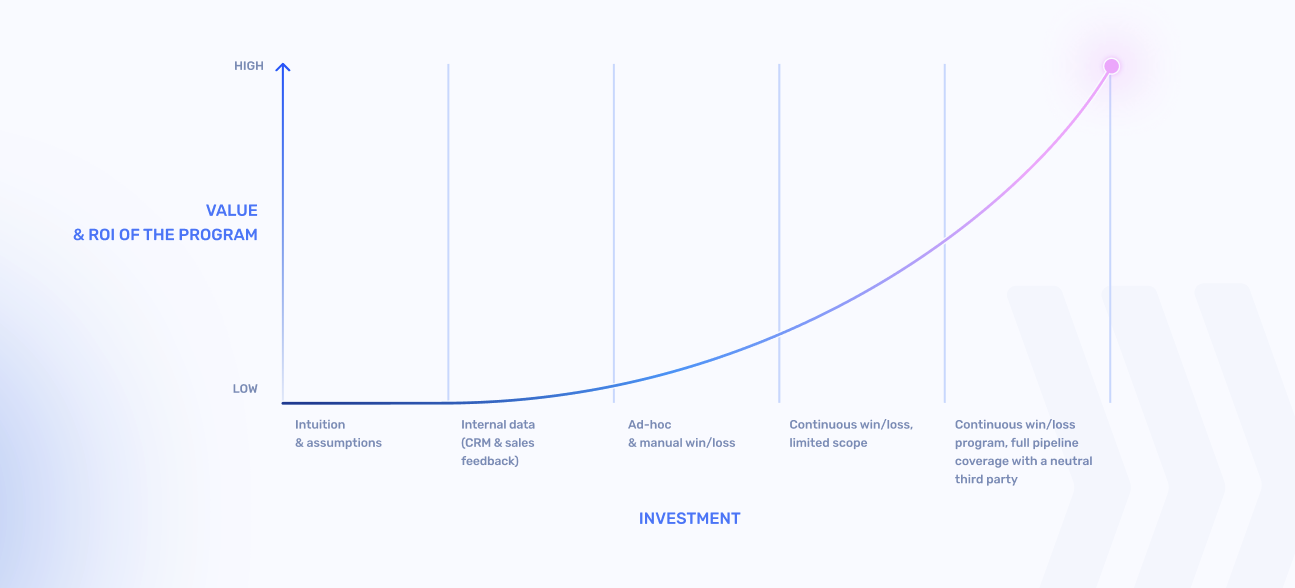
Implementing a win-loss analysis program can take several forms:
- a one-off initiative based on a few manual interviews,
- a continuous program with a limited scope,
- a systematic analysis of the entire pipeline,
- or a program run by a neutral third party with a high level of methodological rigor.
The higher the investment, the higher the return. According to Gartner (Win/Loss Analysis: A Guide for Sales and Marketing Leaders, 2023), a rigorous program can improve commercial performance by up to 50%. Furthermore, 78% of companies surveyed in the Primary Intelligence / Crayon study observed a +32.5% increase in results after putting such a program in place.
Diffly tip: Validate your ambition level collectively to avoid internal misalignment and set consistent expectations across every sales and marketing team.
Step 2: Mobilize your stakeholders around the customer voice
A high-performing win-loss analysis program is cross-functional. The approach touches every team involved in growth.
Key stakeholders to bring on board:
- C-level / Executive leadership : to gain an objective view and direct investment toward the best priorities.
- Revenue Operations : to refine processes, equip sales teams, and improve overall results.
- Sales leadership : to identify winning levers and support team skill development.
- Product Marketing : to sharpen positioning, messaging, and go-to-market strategy.
- Marketing : to grasp industry perception and enrich content.
- Product / Services : to prioritize the roadmap based on real customer feedback.
- Customer Success : to exploit weak signals, reduce churn, and improve customer satisfaction.
- Competitive intelligence : to stay ahead of industry movements.
Every team brings its own perspective but above all, each one expects different insights. This step is about clarifying their needs and securing buy-in from the start.
Step 3: Define your learning priorities
Learning priorities are the heart of the program. Without them, the initiative risks becoming a one-off exercise with no lasting impact.
A win-loss analysis program might aim to:
- improve the effectiveness of the sales force and commercial teams;
- understand the real priorities of prospects and customers;
- identify the essential selection criteria in the sales cycle;
- strengthen the value proposition;
- adjust pricing or the business model;
- optimize the buying journey;
- prioritize the product roadmap;
- measure why results are declining against a specific competitor;
- reduce churn or improve customer satisfaction;
- analyze a sector before a B2B marketing launch.
These priorities directly shape your scopes, interview guides, analyses, and deliverables.
Diffly tip: Re-engage your stakeholders every 3 to 6 months. The environment evolves, and your analysis priorities must evolve with it. The Diffly platform makes it easy to track these shifts and adapt your interview guides accordingly.
Step 4: Select the right segments & identify your IICs (Won and lost deals)
Your CRM already contains the data foundation needed to structure your program. The key lies in knowing how to use it effectively.
Relevant scope examples:
- opportunity size;
- sales cycle length (< 90 days…);
- competitor encountered;
- outcome (won / lost / no decision);
- geography;
- buyer persona;
- product line;
- company type;
- renewal within 3 months;
- ICP (Ideal Customer Profile);
- strategic deals for the executive committee.
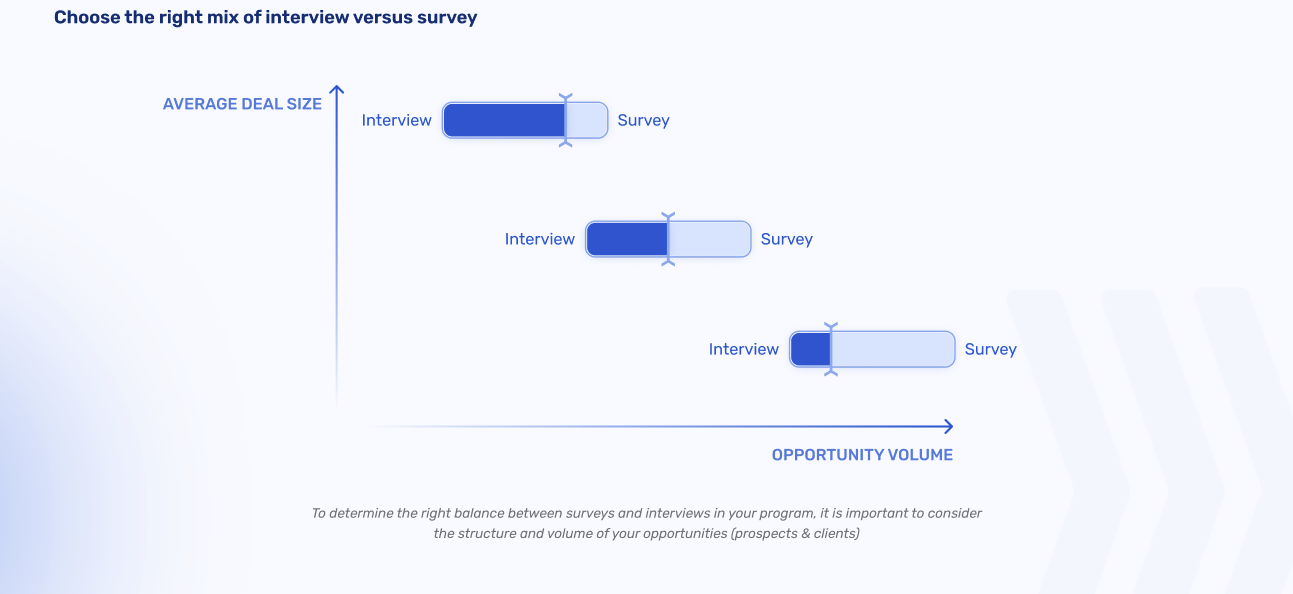
For each scope, define the data collection method:
- Quantitative (survey) when volume is high,
- Qualitative (interview) when the goal is to deeply understand the reasons behind a result.
Best practices:
- prioritize the most advanced deals (richer insights),
- target a minimum of 10 interviews per scope,
- maintain an opportunity volume 3 to 5 times larger than the number of targeted interviews to ensure representativeness,
- balance won deals and lost deals to avoid bias,
- avoid too many filters that artificially reduce volume.
Next, identify your IICs — Ideal Interview Candidates: the people who can explain a final decision. These profiles are not always your usual commercial contacts.
Once scopes are defined, building a decision criteria framework becomes essential. Every buyer evaluating your solution uses a set of criteria to assess your offer. A decision criterion is a factor that influences, positively or negatively, the outcome of a deal. These criteria may be explicitly stated or remain unconscious. They evolve throughout the sales cycle.
Keep your list as short as possible, ideally between 15 and 25 drivers, grouped into main families:
- Product / Service
- Commercial experience
- Pricing & packaging
- Company
- Customer support
Step 5: Build your interview guide (and prepare for it)
An effective interview guide follows the full chronology of the purchase to get a complete picture of what really happened. The quality of customer feedback depends directly on the quality of the guide.
Key sections of the guide:
- Who is the buyer? : break the ice, understand their role and experience.
- Deal origin & initial perceptions : how they heard about you, what triggered the evaluation.
- Selection criteria & expectations : rational criteria and emotional drivers.
- Product / service evaluation : demo, features, perceived differences vs. competition.
- Pricing & business model : value-for-money, ROI perception, competitive comparison.
- Buying experience : quality of the relationship, understanding of customer needs, transparency.
- Competition : perceived strengths and weaknesses of each alternative.
- Negotiation phase : decision-making process, stakeholders involved, friction points.
- Wrap-up : NPS, win-back potential, advocacy, unasked questions, customer satisfaction.
Preparing for the interview:
- build rapport, reassure, express genuine gratitude;
- master the context of the deal;
- follow the buying journey strictly;
- use the "5 Whys" technique to reach the root cause.
A good win-loss interview takes only 30 to 45 minutes but can reshape your strategy for months.
Step 6: Define your commercial recruitment strategy
Participant recruitment is the most underestimated step in the entire implementation. Without participants, there is no viable program.
Winning strategy:
- Collect customer and prospect feedback immediately after the go/no go decision.
- Engage sales teams, AMs, and CSMs to personalize the outreach.
- Use a simple, transparent script: "We take your feedback very seriously. Would you be open to sharing your experience, whether or not we end up working together?"
- Consider a value exchange when appropriate.
- Use suitable incentives: monetary (€25–€100) or non-monetary (credits, modules, early access…).
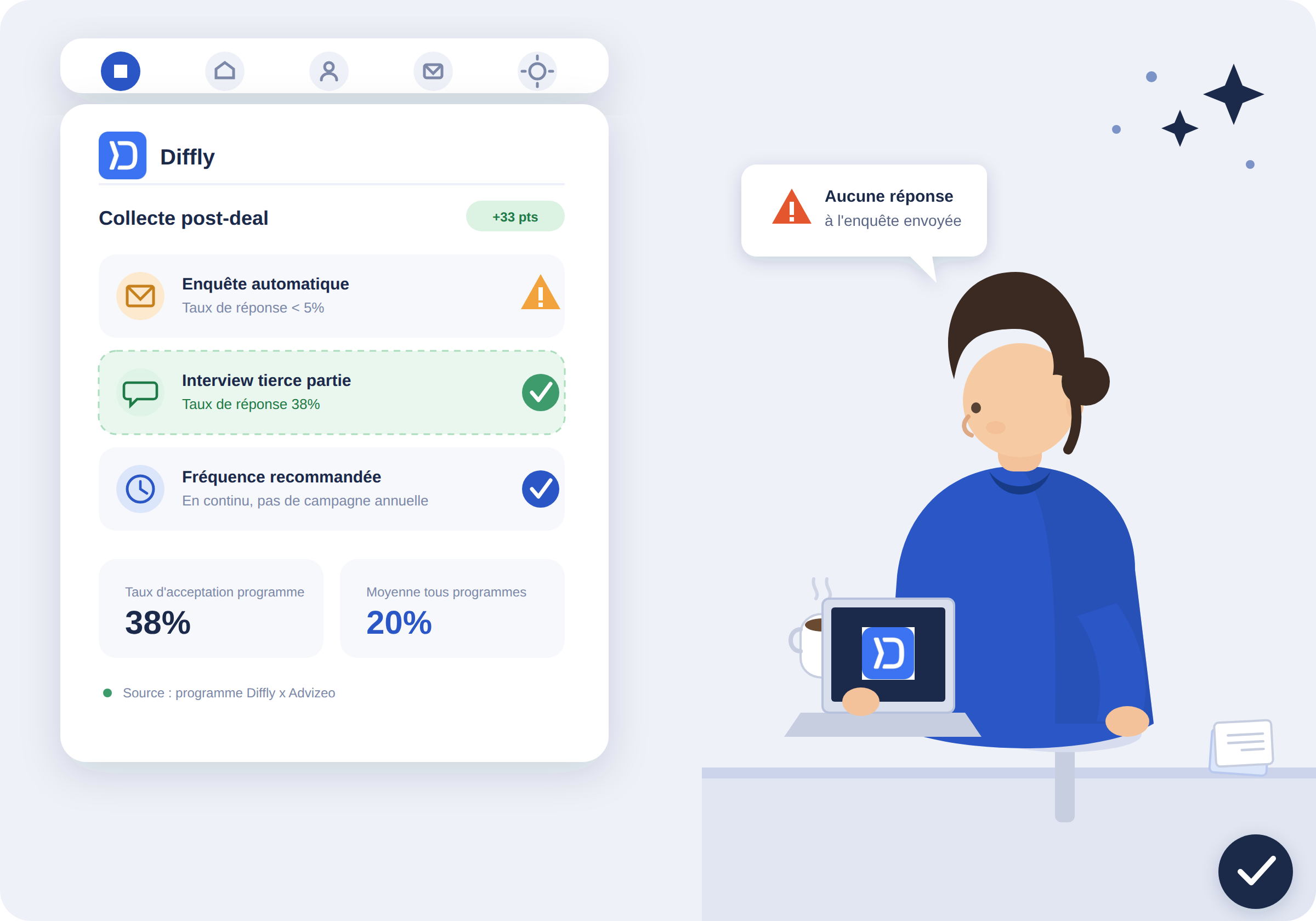
Diffly achieves an average 41% interview participation rate, an exceptional result in B2B marketing, thanks to a structured, neutral analysis methodology. By comparison, Aberdeen Group estimates the industry average hovers around 15 to 20%, underscoring the importance of a rigorous approach. The Diffly platform also automates participant recruitment and follow-up, freeing teams to focus on customer feedback analysis rather than logistics.

Step 7: Analyze and share your findings
This is where the value of a win-loss program is actually created. The initiative means nothing if insights sit in a forgotten file, embedding them in the organization is what makes the difference.
For each interview:
- Clean the transcript.
- Identify the decision criteria that were activated.
- Assign each one an influence level (very positive → very negative).
- Add the exact customer verbatims that explain the impact.
- Surface key takeaways, competitive elements, and actionable recommendations.
- Share with the right people, ideally in real time.
- Tag each insight (product, pricing, sales team, competition…) to identify trends across the quarter.
Recommended sharing formats:
- Slack / Teams: celebrate wins, distribute hot insights.
- WhatsApp digest: ideal for time-pressed executives.
- Monthly digest: insights tailored by department.
- Macro analysis report (quarterly / bi-annual): why you win, why you lose deals, industry perception, competitive benchmarking, sector trends, strategic recommendations, watch points.
Activating insights across the organization:
- battlecards;
- enablement content for sales teams;
- product roadmap prioritization;
- customer-facing pitch decks;
- pricing strategy;
- customer success playbooks;
- client testimonials & reference pages.
This activation transforms a won-and-lost-deal analysis program into a primary growth accelerator.
Conclusion: Launch your program, even a modest one
A perfect program is not required to get started. The best win-loss program is one that is continuous, consistent, and actionable.
Every interview with prospects and customers is an opportunity:
- to improve your value proposition,
- to understand how you are perceived in your sector,
- to adjust your processes and commercial strategy,
- to reduce lost deals through rigorous analysis,
- to increase your competitiveness,
- and to strengthen internal alignment around the voice of the customer.
With Diffly, implementing a win-loss program becomes simple, fast, and measurable. Every sales team has the insights they need to improve, and every customer interview feeds a lasting collective intelligence.
The companies that grow fastest are those that learn fastest. And those that learn fastest are those that listen to their customers.
Sources: Gartner, "Win/Loss Analysis: A Guide for Sales and Marketing Leaders", 2023; Primary Intelligence / Crayon, "State of Win-Loss Analysis", 2022; Forrester Research, "The Business Impact of Customer-Centric Go-to-Market Strategies", 2023; Aberdeen Group, "Win-Loss Analysis Benchmark Report", 2022.

Richtext Templates

"Lorem ipsum dolor sit amet, consectetur adipiscing elit. Suspendisse varius enim in eros elementum tristique."
John Doe
Name, Role @Google

Analysing CRM data is a good 1st step but I know I only get 20% of the real story

Constance Morales
Constance Morales, Product Marketing Manager @ Scaleway