Summarize this article with:
A promising deal, smooth interactions, a compelling pitch… but at the last moment, the prospect disappears: "Sorry, we’ve chosen another solution."
Why? Too expensive? Not innovative enough? A more responsive competitor?
The truth is, 70% of lost deals are due to reasons unrelated to price or product (Source: Bain & Company). Yet, without a structured analysis of buying decisions, companies rely on assumptions, moving blindly from one deal to the next.
Win-Loss Analysis can change the situation : this process provides deep insights into what truly drives buying decisions and helps companies adjust their strategy accordingly. Businesses that integrate it into their processes see a 50% improvement in conversion rates and an 18% reduction in churn (Sources: Gartner, Deloitte).
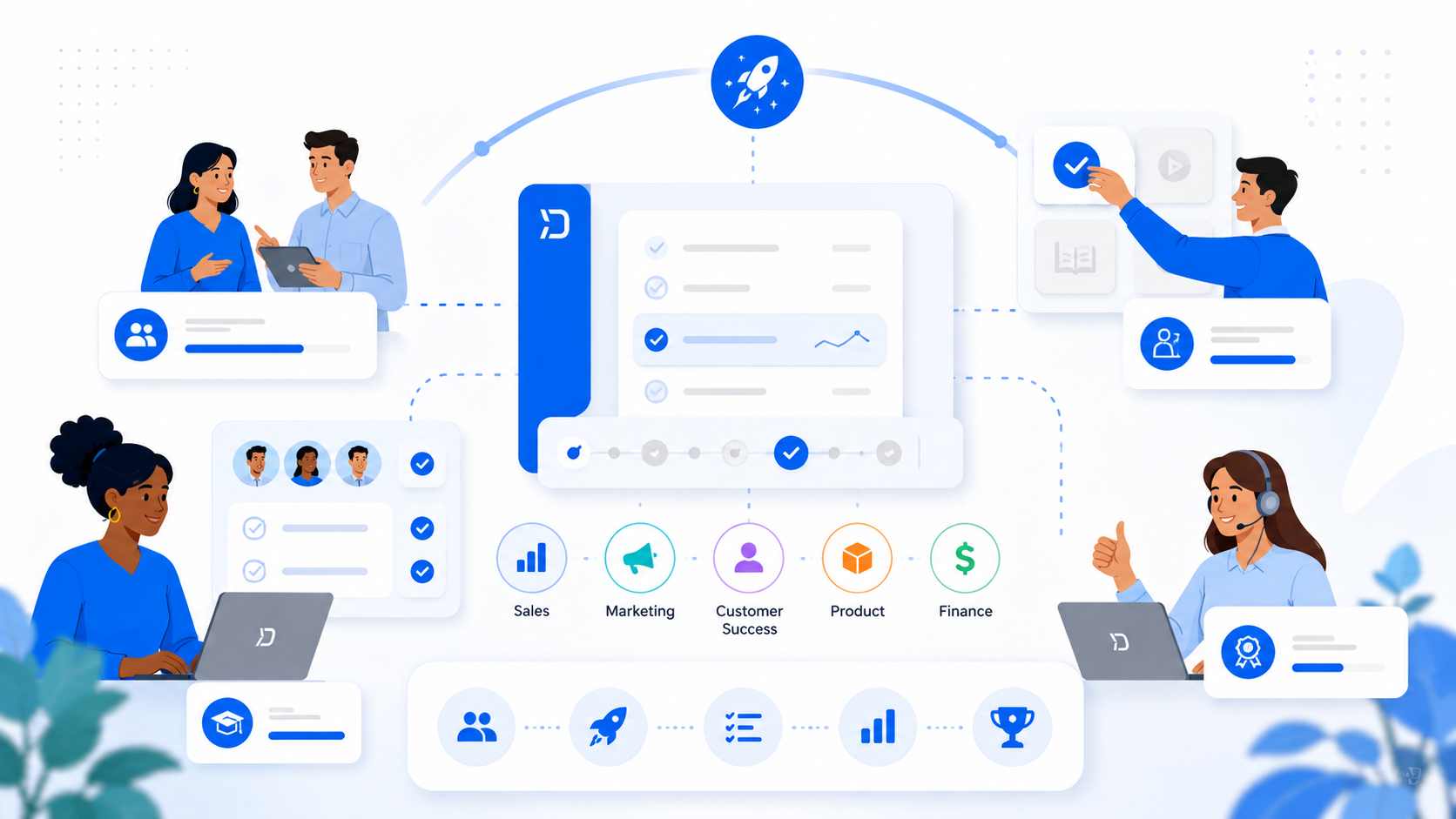
But for this approach to be effective, it must be embraced by the entire organization, whether in sales, marketing, or customer retention teams. Here are six concrete strategies to make Win-Loss a strategic process in your company.
Strategy 1: Start with concrete and actionable proof
Convincing a company to adopt a new methodology requires demonstrating its real business impact.
Instead of explaining Win-Loss theoretically, start with a simple internal question:
"Why did we lose our last 10 deals?"
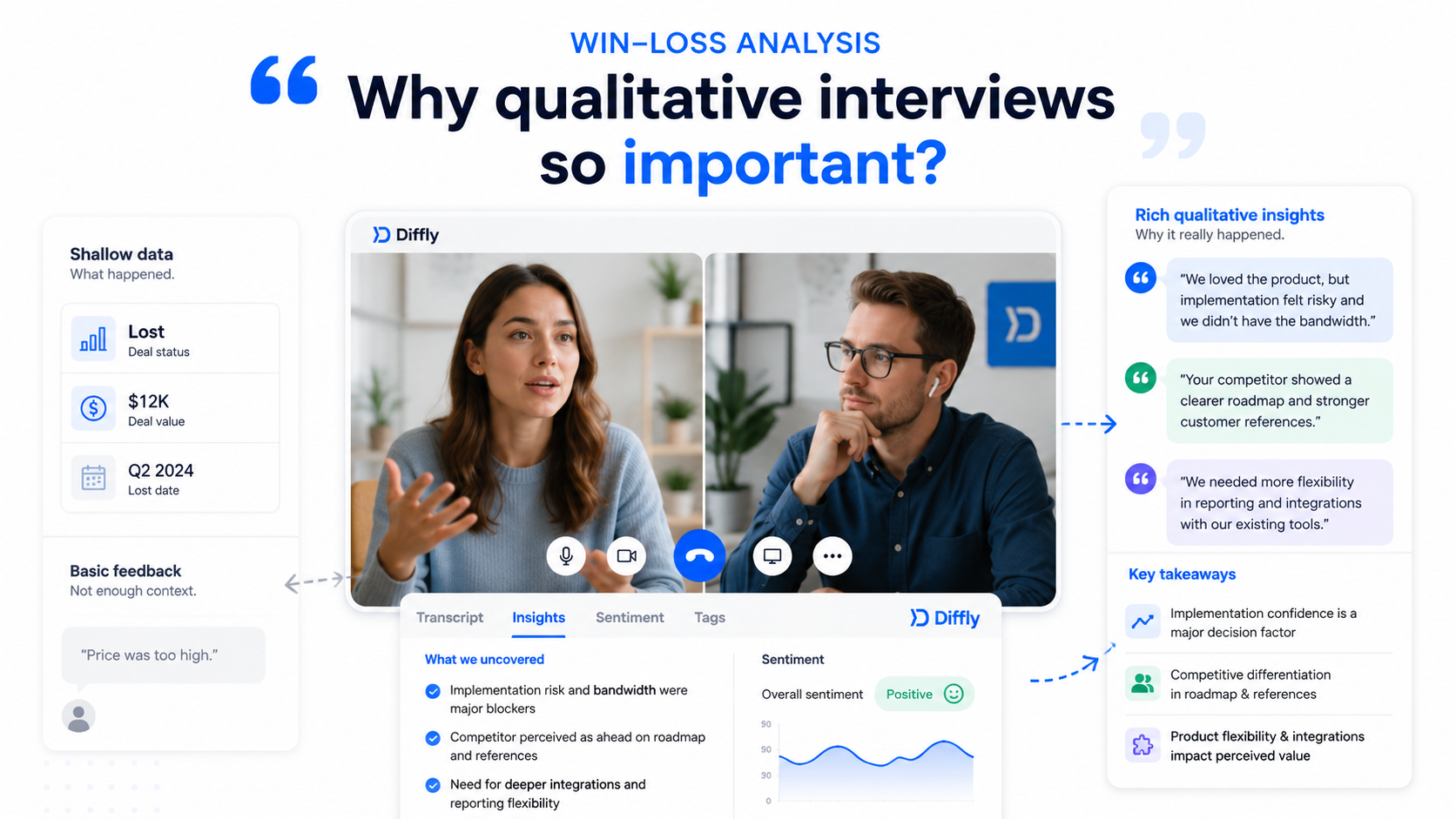
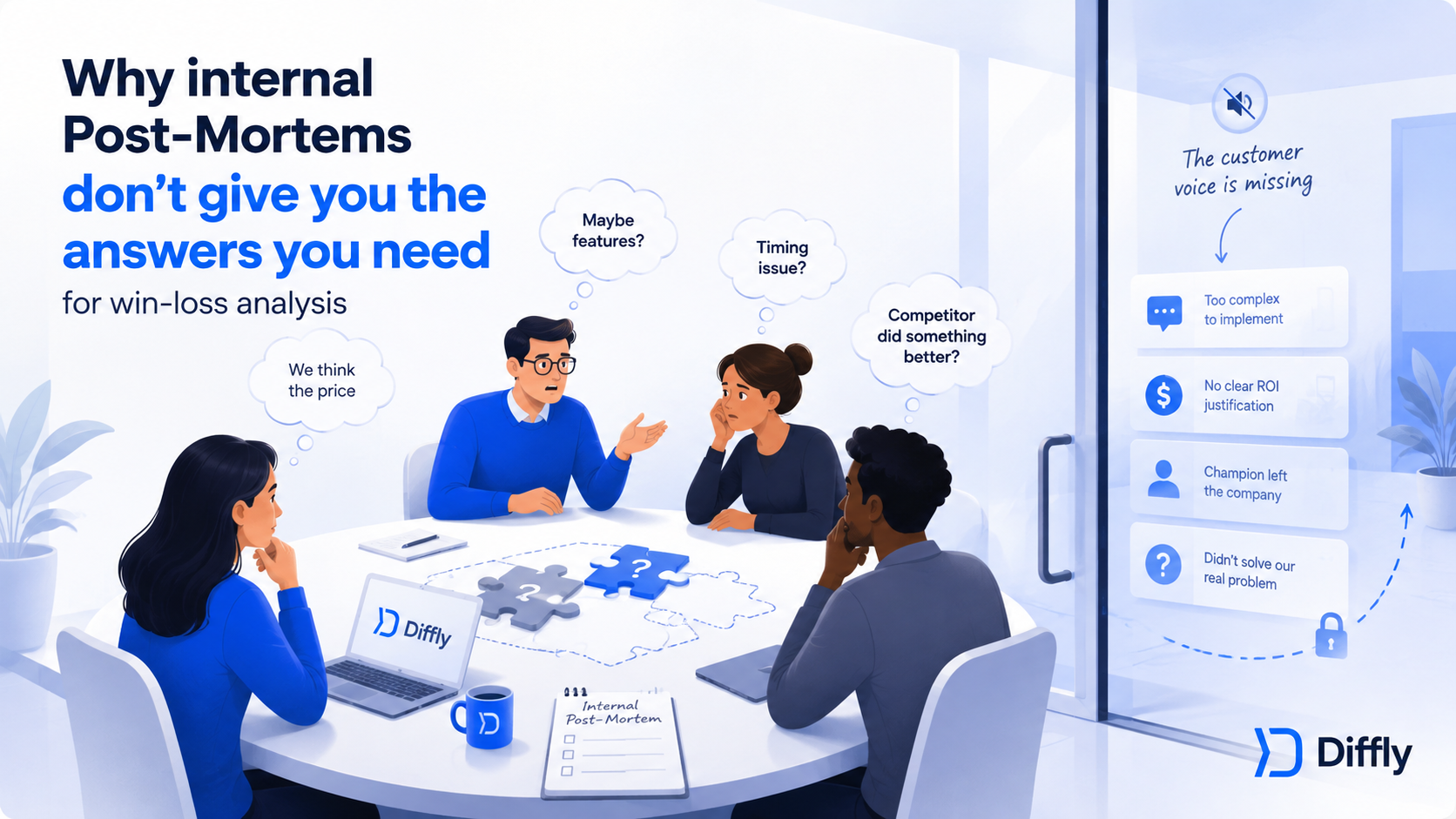
The answers vary, often without hard evidence. Price, competition, bad timing… But is that the real reasons?
Companies that implement a structured win-loss process often discover that the real reasons lie elsewhere, a misperception of the product, a complex onboarding process, or a misalignment with the prospect’s needs.
What to do:
- Share real case studies where Win-Loss Analysis helped improve the conversion rate
- Present concrete numbers: "A SaaS company discovered that 30% of their losses were due to an unclear value proposition. By refining their messaging, they increased their closing rate by 12%."
The key takeaway? Not doing Win-Loss is leaving money on the table.

"Diffly helps us anticipate churn from our clients. Thanks to their unbiased interviews & surveys, our clients are able to express what is wrong and what is right. We considerably improved customer satisfaction and reduced churn by 30%. On top of that Diffly is a lever to detect upsell opportunities. We now use Diffly on a daily basis to make sure we are fulfilling the needs of our customers"

Victor
COO, @Scalability
Strategy 2: Get top management buy-in
Without leadership support, Win-Loss Analysis risks becoming a theoretical exercise with no real impact on strategy.
Why? Because analyzing wins and losses isn’t just about sales, it shapes product strategy, marketing positioning, and executive decision-making.
- Link win-loss to key business KPIs: revenue, churn, sales cycle length, conversion rate
- Involve executives by showing results in leadership meetings
- Highlight the long-term impact: "If we don’t understand why we’re losing, we’ll keep making the same mistakes.”
When leadership adopts win-loss as a strategic decision-making tool, it naturally integrates across the company.
Strategy 3: Embed Win-Loss into existing processes

The most common mistake? Treating Win-Loss Analysis as a one-time exercise, done once a year. The result? Insights that are too broad, not actionable, and quickly outdated.
For win-loss to be effective, it must be a continuous process, embedded in daily operations.
Concrete steps:
- Automate post-decision feedback via your CRM using marketing automation tools to prevent data loss.
- Make win-loss debriefs a standard practice in sales and marketing meetings.
- Analyze trends in real-time, instead of waiting until year-end.
The goal? Ensure that every team, from marketing to sales, can leverage these insights daily.
Strategy 4: Shift sales teams’ perception of Win-Loss
Sales teams may see Win-Loss Analysis as a performance review, which can prevent adoption. But in reality, it’s a powerful tool for success, helping them refine their approach and close more deals.
It’s crucial to reposition win-loss as a continuous improvement tool:
- A way to optimize the sales cycle, not an evaluation tool.
- An opportunity to refine the sales pitch, not a critique.
- A productivity booster that helps close more deals, not an extra task.
To ensure sales teams fully embrace Win-Loss:
- Share quick wins from past analyses and involve them by asking about their most frustrating objections
- Turn insights into actionable takeaways, such as improved sales scripts, objection-handling techniques, and refined pitches
- Automate feedback collection and integrate summaries into the CRM, using tools like lead nurturing workflows
The key message: win-loss isn’t about blame, it’s about winning more deals.
Strategy 5: Leverage Win-Loss insights to guide product development
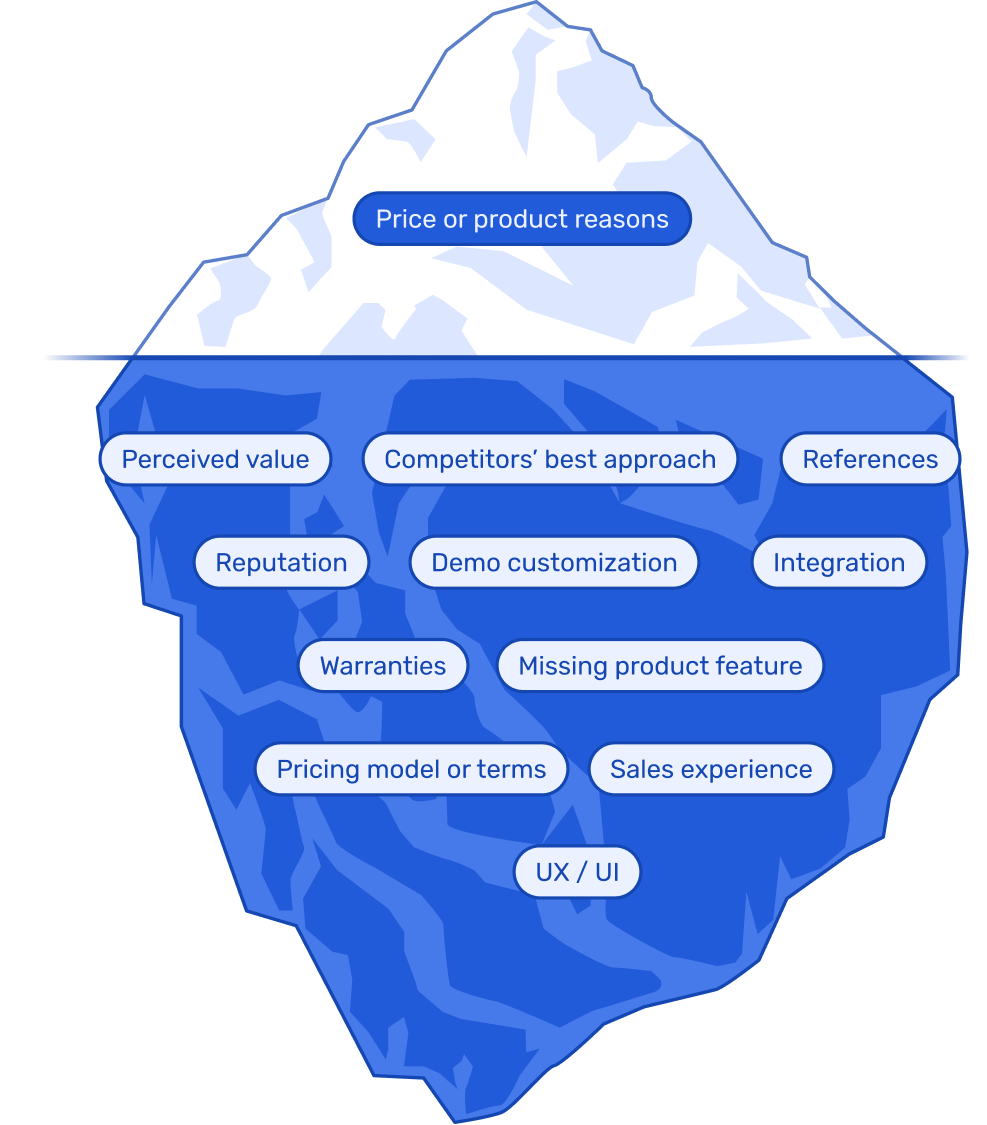
Lost deals aren’t always a sales issue. In many cases, the product itself doesn’t meet prospect expectations.
Without a structured process, these insights remain trapped within the sales teams, never reaching product managers.
How to avoid this information gap?
- Bridge the gap between sales and product teams with regular win-loss summaries
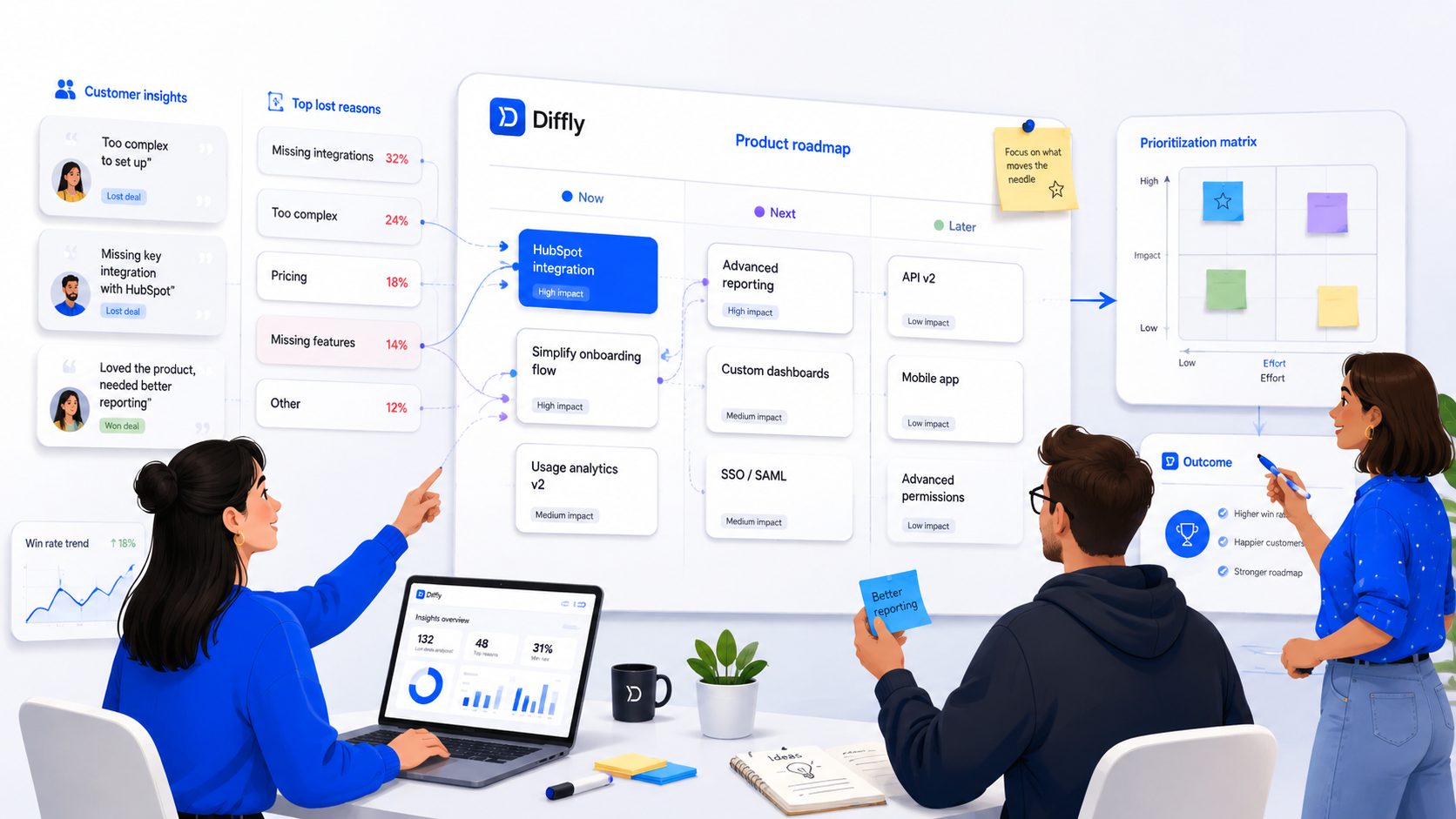
- Identify missing or misunderstood features
- Prioritize product improvements based on feedback from B2B customers
Example: A tech company thought they were losing deals due to pricing. But through win-loss analysis, they discovered that the real issue was a complicated onboarding process. By improving it, they increased their conversion rate by 15%.
Strategy 6: Turn analysis into action
Too often, Win-Loss Analysis reports remain just reports, leading to no concrete action.
But their real value lies in driving corrective actions.
What to do:
- Define immediate next steps after each analysis, adjusting sales pitches, improving the product, or tweaking marketing strategies.
- Track the impact of decisions to measure effectiveness.
- Make Win-Loss a continuous decision-making tool.

"Since the implementation of the platform, our win rate has increased by 25% and we are now able to make strategic decisions based on data rather than feelings. Diffly is a game changer tool for us."

Simon
CEO, @Reveal
Conclusion: Adopting Win-Loss is investing in success
At Diffly, we help companies implement actionable and impactful Win-Loss programs. A lost deal isn’t a failure—it’s a hidden opportunity. By truly understanding why a prospect says "yes" or "no”, companies can refine their strategy, optimize sales, and gain a competitive edge.
Market leaders don’t just sell. They listen, analyze, and continuously improve.
Discover how Diffly can help you boost your results book a demo today.

Richtext Templates

"Lorem ipsum dolor sit amet, consectetur adipiscing elit. Suspendisse varius enim in eros elementum tristique."
John Doe
Name, Role @Google

Analysing CRM data is a good 1st step but I know I only get 20% of the real story

Constance Morales
Constance Morales, Product Marketing Manager @ Scaleway