Summarize this article with:
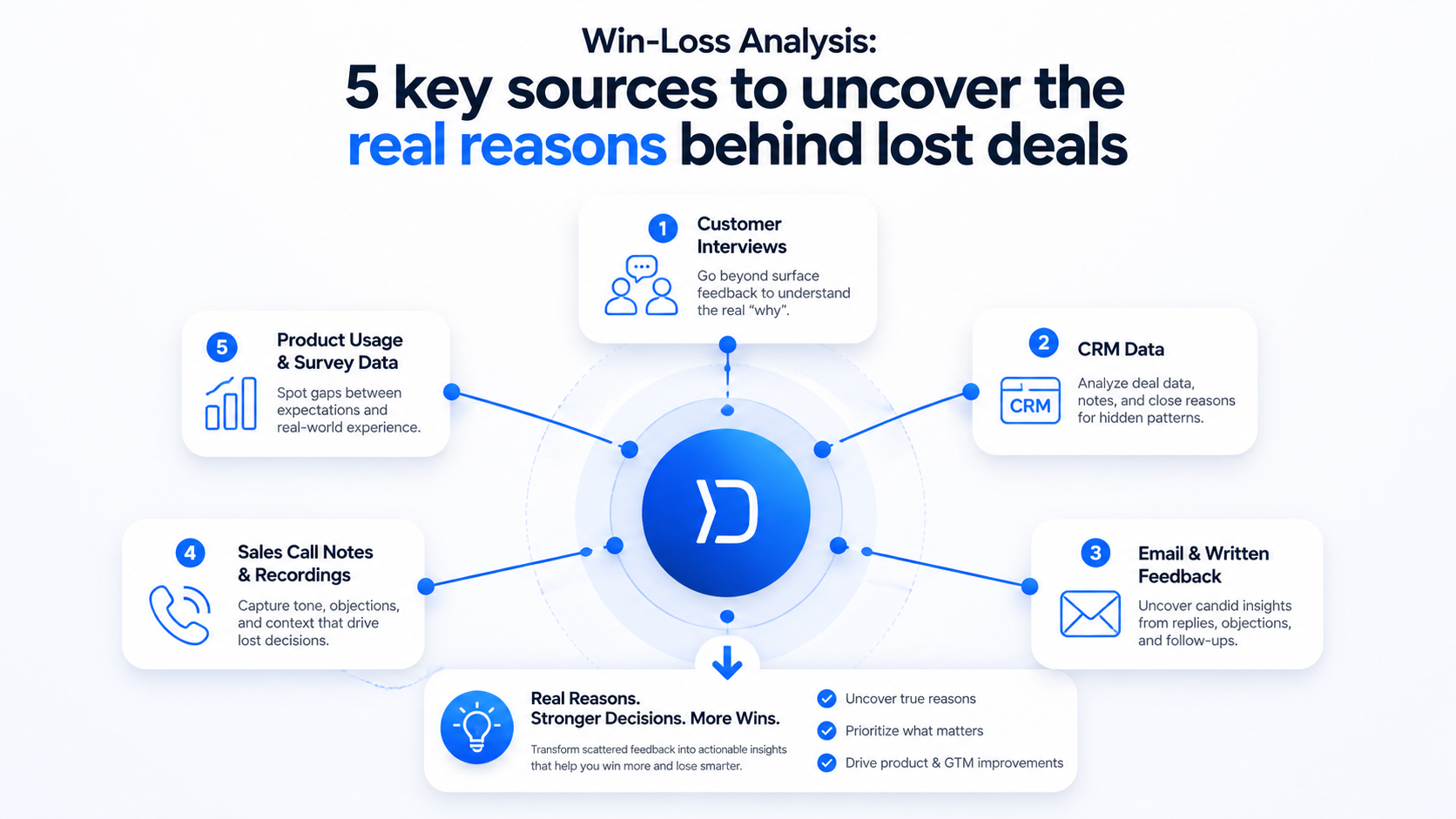
Win/loss analysis is a structured method that identifies the real reasons behind a lost deal not the simplified categories a CRM records, but the actual causes that explain why a customer said no, why an opportunity stalled in the sales cycle, or why a buying process never reached a conclusion.
In many B2B companies, sales management platforms like Salesforce, HubSpot, or Microsoft Dynamics have become the backbone of customer tracking and sales team management. Yet despite their advanced features, a large portion of strategic information remains invisible in the CRM data collected.
A deal is lost. The rep logs a reason. Someone checks "price," "timing," or "competition" in the dashboard. And the team moves on.
This scenario plays out in almost every B2B company. Not out of negligence, but because these CRMs were designed to structure customer data, streamline reporting, and improve sales tracking efficiency. According to the McKinsey B2B Pulse 2024 report, conducted among nearly 4,000 decision-makers across 13 countries, B2B buyers use an average of 10 different interaction channels before making a purchase decision a complexity that pipeline checkboxes simply cannot reflect.
Over time, this oversimplification can reduce the quality of strategic decisions, distort customer segmentation, push marketing campaigns in the wrong direction, and limit overall sales performance.
The myth: after a no, there's nothing left to learn.
The reality: the signals exist in customer interactions, but they don't surface correctly in the CRM data collected. Even the most sophisticated analytical CRMs, whether operational, analytical, or collaborative, have structural limitations when it comes to understanding the real motivations behind a purchase decision.
This is precisely where win/loss analysis becomes a strategic lever to improve customer relationships, understand buyers' real needs, and adapt sales actions in real time.
1. What CRMs record after a "no"
In most companies, using a CRM is primarily about structuring the pipeline, generating reports, facilitating CRM data integration, and providing clear visibility into ongoing opportunities.
Loss reasons look the same everywhere in CRM data: Price. Timing. Competition. No decision.
These categories help maintain an efficient operational CRM and support dashboards and data analysis. But they also create a dangerous bias.
Checking "price" doesn't call into question the marketing, the sales pitch, customer segmentation, or positioning. It's a simple answer that helps close a lost opportunity quickly without reopening any internal debate.
These CRMs capture an acceptable version of the loss, not the strategic reality of buying behavior.
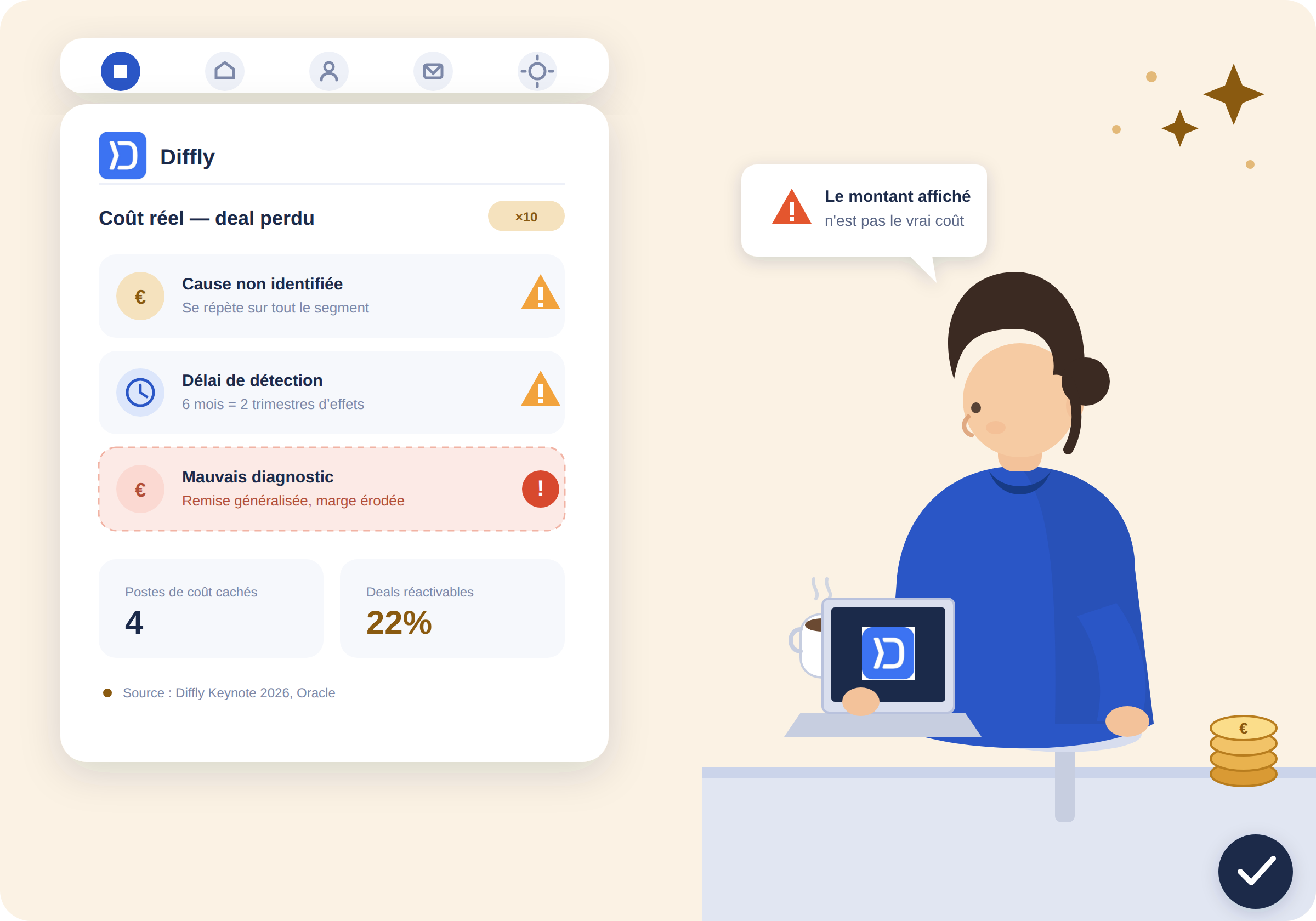
A telling figure: according to Corporate Visions, which analyzed over 100,000 B2B purchase decisions across 500 companies and 50 industries, sellers and buyers cite different reasons to explain a lost deal in 50 to 70% of cases.
In 10% of opportunities closed as "lost," the buyer was still evaluating their options. The HubSpot Sales Trends 2024 report confirms that the average B2B conversion rate is just 21%, meaning 79% of opportunities end in a loss, often poorly categorized in CRM data.
2. The real reasons behind standard CRM categories
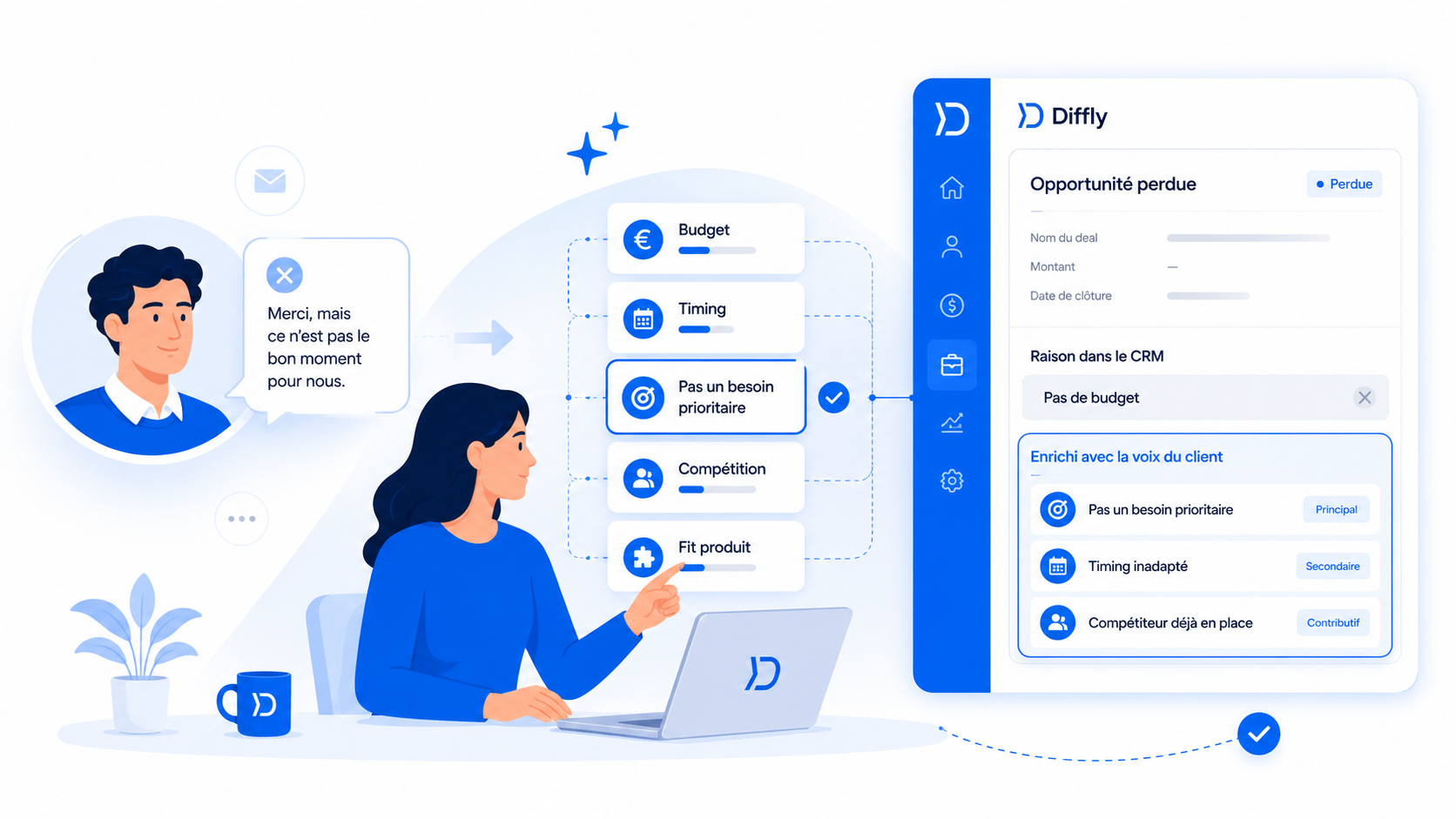
Advanced qualitative CRM analysis shows that the real reasons diverge significantly from the categories visible in CRMs. Here are the differences between an analytical CRM and field reality:
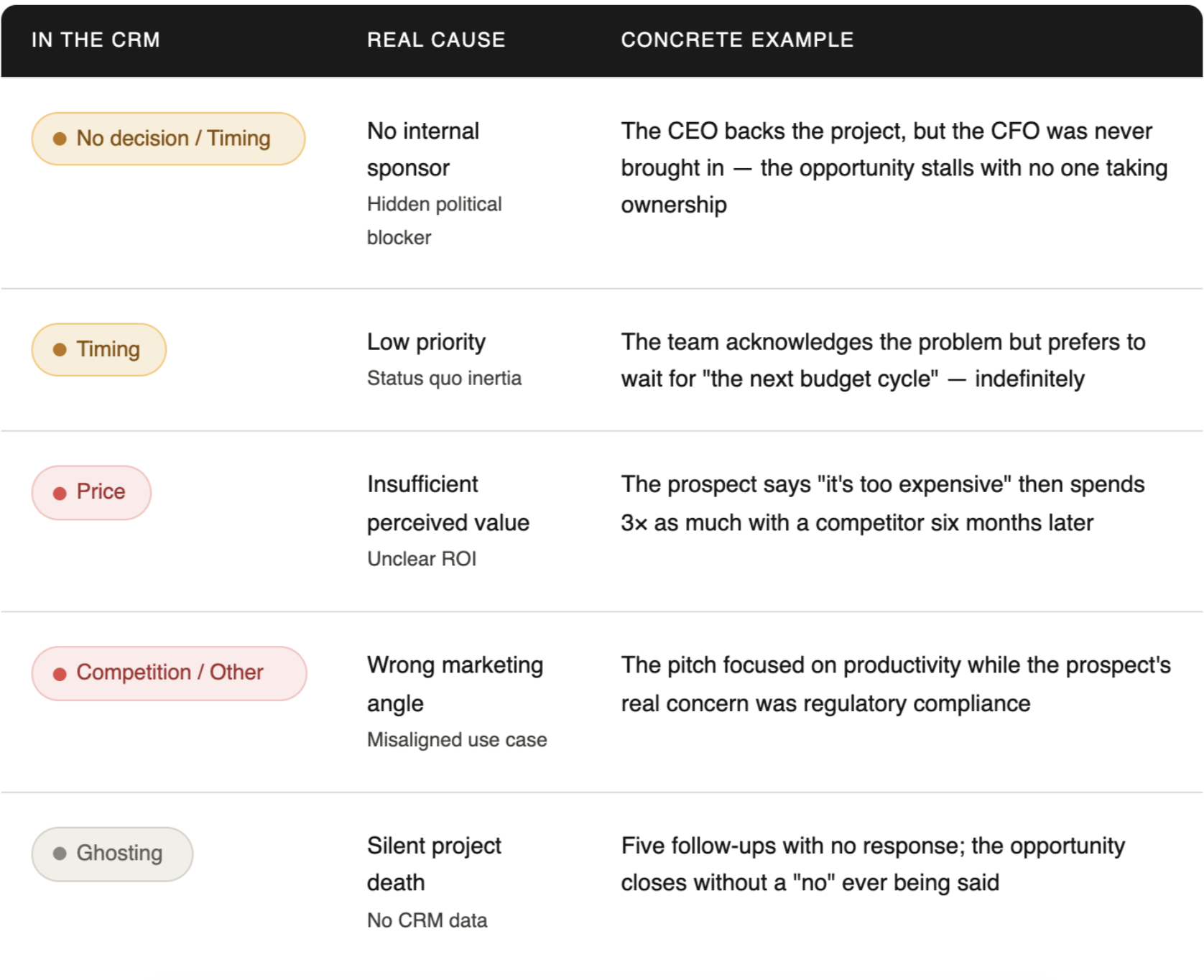
2.1 "We couldn't get internal alignment"
The decision committee never converged. No internal sponsor had enough weight to push the project forward within the organization. The failure didn't come from your offer, your service, or your sales arguments, it came from an internal dynamic you couldn't observe from the outside.
According to Gartner, the average number of stakeholders involved in a B2B purchase has grown from 5 to more than 11 people, and can reach 20 for complex projects. 87% of buying groups now include at least four decision-makers. Each additional stakeholder extends the sales cycle and multiplies the risk of stalling. A more refined stakeholder management strategy, mapping influencers, identifying the real sponsor, can significantly reduce this risk.
➡ Recorded in CRM as: no decision / timing
2.2 "It wasn't a high enough priority"
The need existed, but it wasn't strategic enough to trigger immediate action. In many organizations, the status quo is stronger than change, even when the ROI seems compelling.
According to Forrester, nearly 90% of global B2B buyers reported a blockage in their purchasing process in 2023. That same year, around 60% of opportunities resulted in a non-decision (The Anova Group). The market isn't shrinking, organizational inertia wins by default, for lack of sufficient urgency. CRM data cannot distinguish a genuine loss from a non-decision.
➡ Recorded in CRM as: timing
2.3 "We couldn't clearly see the value"
The question isn't always price. Very often, the perceived value wasn't clear enough, the marketing message wasn't targeted enough, or the ROI was too difficult to measure to justify a decision.
When a prospect says "it's too expensive," they often mean: "the value wasn't visible enough to justify the investment." According to SBI (2024), 74% of B2B buyers say they faced too many options and decision paths during their last major purchase. This information overload drowns the value proposition instead of clarifying it. Gartner notes that a "value framing" approach increases the quality of closed deals by 20%, and "value affirmation" by 30%.
➡ Recorded in CRM as: price
2.4 "It wasn't the right problem"
The solution was good. But it addressed a problem that wasn't the one the prospect was prioritizing. The sales angle was misaligned with the real need, a gap between the use case being pitched and the customer's actual reality.
According to Emblaze (2024), salespeople focused on the customer's problem are 30% more effective than those focused on the solution. Yet only 13% of sellers naturally adopt this approach during the discovery phase. The CRM cannot detect this gap, only an in-depth CRM analysis reveals it.
➡ Recorded in CRM as: competition / other
3. The most common "no": the one never recorded in your CRM
There's a fifth reason for losing opportunities, probably the most common in B2B, that CRMs almost never capture: ghosting.
The prospect disappears. Emails go unanswered. The opportunity sits idle in Salesforce. Then the deal is closed without any real analysis of buying behavior.
Ghosting often reveals:
- A lack of priority : the project didn't warrant a formal decision
- Poor initial qualification quality : the need wasn't real or urgent
- Insufficiently demonstrated value : the prospect saw no compelling reason to act
- No internal sponsor : no one on the client side was invested in the decision
- Discomfort with saying no directly : especially after several exchanges
An aggravating factor: according to Gartner (2024), 73% of B2B buyers actively avoid vendors who send out-of-context messages. Poorly targeted follow-ups after silence don't revive the decision, they confirm to the prospect that they were right to disappear.
Ghosting is strategic information. It almost never means the prospect chose a competitor. It most often means the project wasn't prioritized enough, the internal sponsor lost influence, or the value was never made tangible enough to trigger action. Yet this customer data is actionable if you have the right CRM analysis tools.
4. Why these signals are ignored in CRMs
These signals are difficult to exploit in a traditional CRM for three structural reasons.
They're uncomfortable. A deal lost due to a messaging or qualification problem calls into question the product, the positioning, the marketing strategy. A deal lost "because of price" gets fixed with a discount. It's simpler to check the second box in your operational CRM.
They're cross-functional. These signals simultaneously concern sales teams, marketing, customer service, product, and segmentation strategy. No one is clearly responsible for addressing them, so no one does. 83% of sales directors admit their teams struggle to adapt to the evolving expectations of buyers (Gartner, 2024). A collaborative CRM alone isn't enough to create this coordination.
They're hard to quantify. An analytical CRM can measure how many opportunities are lost on price. Identifying customer relationship issues, value perception problems, or political alignment within a client organization requires a qualitative method that dashboards don't natively support. This is where qualitative analysis brings its full value, as a complement to analytical CRM features.
5. What a real win/loss analysis changes compared to your CRM
A win/loss analysis isn't trying to fill another report in your CRM.
It asks different questions: who was really making the decision? At what stage did it stall? What mattered in the final call? What did the buyer understand about your value and what didn't they understand?
It shifts from justification to understanding. That's a fundamental difference for long-term sales performance.
According to Corporate Visions, 53% of deals closed as "lost" were actually recoverable if the right actions had been taken at the right time. Applied to an annual pipeline worth several million euros, even a marginal recovery rate generates a measurable return on investment.
What win/loss analysis enables that CRMs alone cannot:
- Identify the real reason behind an internal blockage, not its administrative translation in CRM data
- Understand whether the issue lies in messaging, qualification, timing, or the product
- Distinguish opportunities lost by default from those lost after a genuine competitive evaluation
- Detect recurring trends in customer satisfaction and relationships that never surface in CRM aggregates
- Improve conversion rates by targeting the right levers, not the wrong ones
- Leverage customer data qualitatively to personalize future approaches
- Base your marketing campaigns on precise, relevant customer data
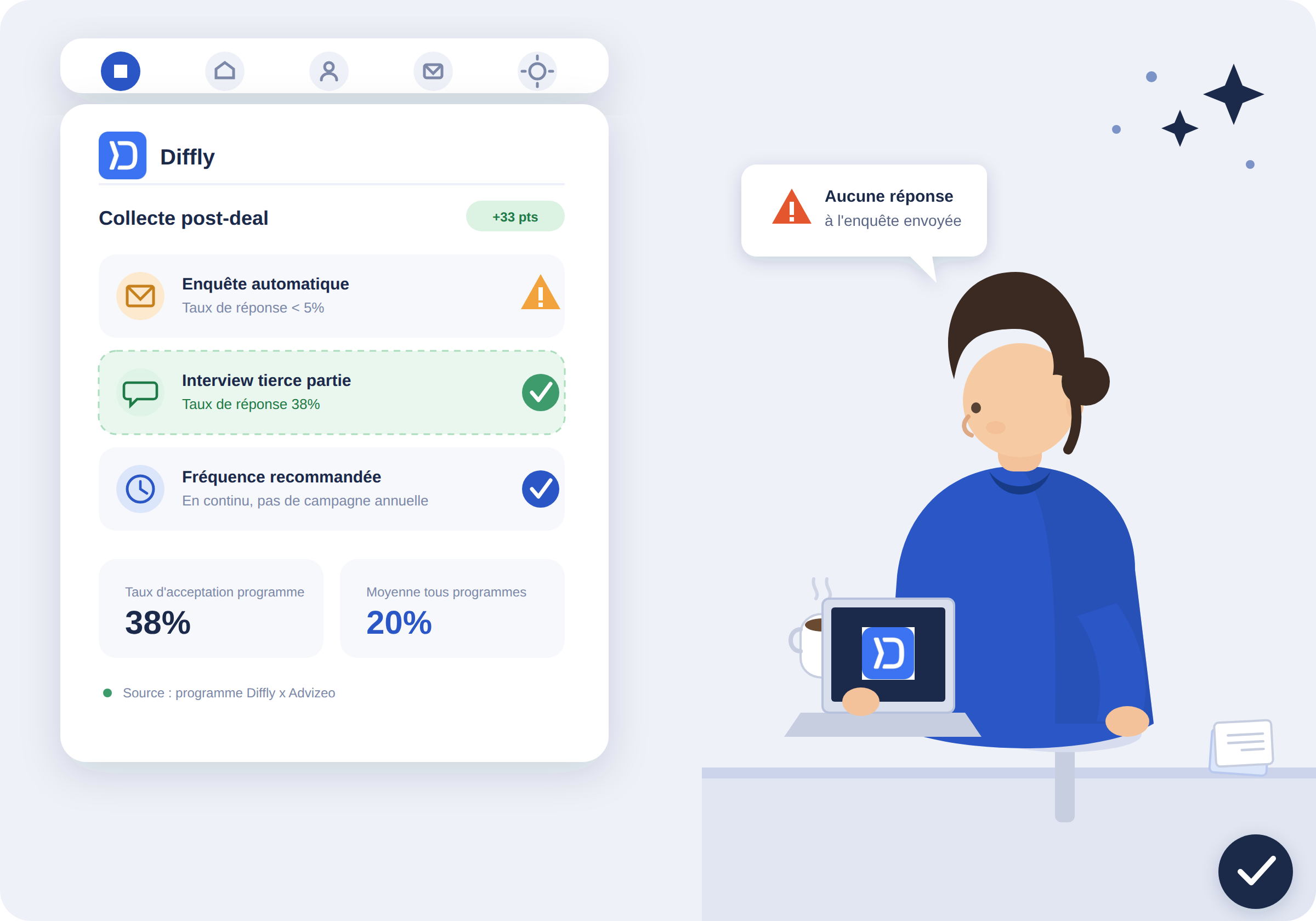
And above all: access what the buyer was really thinking, but didn't tell your sales rep. What prospects say to the person they just said no to, and what they would say to a neutral third party, are two very different things. Using an analytical CRM to collect this data in a structured way will help you improve communication with future prospects.
6. How to turn these "nos" into learnings through your CRM
Identify recurring trends in your CRM data
A single lost deal produces an anecdote. Ten lost deals for the same reasons produce a signal worth acting on. The most frequent CRM analysis trends to watch for:
- No strong internal sponsor on the client side
- Urgency poorly qualified early in the sales cycle
- Insufficient perceived value despite a full demonstration
- Buying behavior misread during the qualification phase
- A competitor (Salesforce, Microsoft Dynamics, niche player) positioned differently on a key criterion
Segmenting customers according to these trends will help you focus your efforts on the most relevant opportunities and adapt your sales cycle accordingly. This is precisely what an advanced analytical CRM should enable you to do on a daily basis.
Share these learnings with the right teams
A win/loss insight that stays in a quarterly deck changes nothing. The value comes from distributing it to the teams that can act:
- Sales teams : adjust the pitch, better handle objections, improve qualification, and use the CRM to track progress
- Marketing : refine messaging, improve customer segmentation and differentiation angles, optimize marketing campaigns
- Product : prioritize development based on buyers' actual decision criteria
- Customer service : identify gaps between the commercial promise and the real customer experience, improve customer satisfaction and loyalty
A well-used collaborative CRM facilitates this communication and allows each team to leverage customer data from win/loss analysis.
Adjust continuously through CRM data analysis
Win/loss analysis isn't a one-time project. It's an ongoing process that keeps the company aligned with buyer reality and allows course correction before bad habits take hold. A minimum of 8 to 10 analyses per quarter is needed to surface statistically significant trends from your CRM data.
Leveraging this data systematically in your analytical CRM also helps measure customer lifetime value, improve the overall customer experience, and reduce churn over the long term.
A "no" well understood is often worth more than a "yes" poorly analyzed.
Conclusion: CRMs alone are no longer enough to understand buying behavior
Modern CRMs like Salesforce, HubSpot, or Microsoft Dynamics offer powerful features for collecting customer data, structuring sales processes, and facilitating opportunity tracking. Whether operational, analytical, or collaborative, using a CRM remains essential for effectively managing customer data and driving sales team performance.
But even the most advanced analytical CRM cannot replace a human understanding of purchase decisions. The CRM data collected tells part of the story. Customers tell the rest.
A company that wants to sustainably improve its conversion rate and sales performance must learn to analyze what happens after a no, leverage data qualitatively and use its CRM not only as a management system, but as a starting point for a deeper understanding of buying behavior. It's by combining CRM data analysis with a structured qualitative approach that you can truly improve customer satisfaction, retain existing customers, and personalize interactions with future ones.
The problem isn't that customers say no.
It's that we don't take the time to understand why, and CRM data alone will never be able to answer that question.
If you'd like to structure your win/loss analysis approach, improve your conversion rate, or better understand your prospects' buying behavior, Diffly can help.

Richtext Templates

"Lorem ipsum dolor sit amet, consectetur adipiscing elit. Suspendisse varius enim in eros elementum tristique."
John Doe
Name, Role @Google

Analysing CRM data is a good 1st step but I know I only get 20% of the real story

Constance Morales
Constance Morales, Product Marketing Manager @ Scaleway